
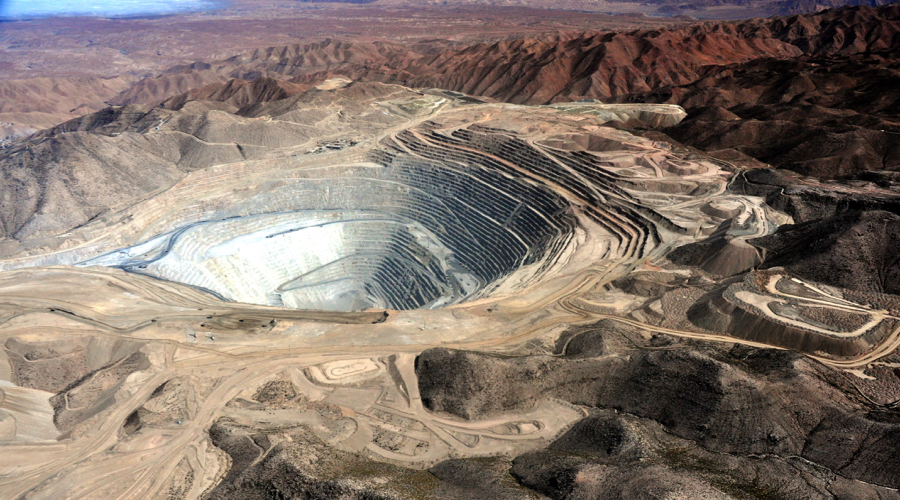
Peru, a country abundant in mineral wealth, has long faced a dual reality when it comes to mining. On one hand, mining is a key economic driver, especially in gold production. On the other, a significant portion of mining activity occurs outside the law, leading to environmental destruction, social unrest, and economic inefficiencies. In an effort to address this, the Peruvian government initiated a mining formalization process that culminated in the creation of the Registro Integral de Formalización Minera (REINFO) in 2017. This registry was intended as a transitional mechanism to bring informal artisanal and small-scale miners into the legal fold, granting them temporary legal protections while they worked toward meeting the full suite of regulatory requirements. However, the REINFO system has largely failed to meet its objectives, and as Peru approaches 2026, it is preparing to sunset REINFO in favor of a new legal and institutional framework.
REINFO was introduced as part of a broader push to distinguish between informal and illegal mining. Illegal mining is defined as any activity conducted in prohibited zones, without permits, or entirely outside the state’s formalization processes. It is subject to criminal prosecution. Informal mining, however, refers to miners who operate in areas where mining is allowed but lack one or more key administrative authorizations, such as environmental permits or contracts with land concessionaires. By enrolling in REINFO, these miners were given the status of “in process of formalization,” a legal buffer that shielded them from criminal charges as long as they took steps toward becoming fully compliant.
The registry initially aimed to incentivize formalization by providing miners with a legal avenue to work while gradually meeting requirements. However, the process quickly began to falter. Since its formal launch, only about 1.5% to 2% of the over 80,000 registered miners have achieved full formalization. The vast majority remain in limbo—neither illegal nor fully compliant. This failure is rooted in both systemic flaws and practical obstacles. Many miners lack the technical capacity, financial resources, or political leverage to navigate the complex bureaucracy. Key among the barriers is the requirement for an exploitation contract or property title, which is needed to demonstrate legal access to the mining area. Approximately 97% of REINFO-registered miners operate on land owned by third parties, typically larger mining companies. These companies often refuse to sign contracts, fearing legal or commercial complications, effectively trapping small-scale miners in a gray zone.
Critics have argued that REINFO has not only failed to promote formalization but has also unintentionally enabled continued illegality. Because enrollment in the registry protects miners from prosecution, it has become what some call a “shield of impunity.” In practice, this means that miners can operate without meeting environmental standards, obtaining proper permits, or addressing labor and safety issues, as long as they maintain their status in the system. This situation has led to widespread environmental damage, particularly from the use of mercury and the contamination of waterways. Moreover, repeated government decisions to extend the REINFO deadline have undermined any urgency to formalize. Miners have learned that by staging protests or applying political pressure, they can secure additional extensions, thereby avoiding full compliance indefinitely. One economist described this as a “comfortable stage” where miners have little to gain from actually completing the formalization process.
The weaknesses of REINFO are not limited to the miners themselves. Oversight has also been deficient. Originally, the responsibility for monitoring REINFO participants fell to regional governments. However, these agencies often lacked the logistical, technical, and economic capacity to conduct effective inspections or enforce compliance. This led to inconsistent enforcement and allowed many registered miners to continue operating with minimal oversight. Another major issue has been the misinterpretation of REINFO as a mining permit itself. In some regions, registration has been treated as a de facto authorization to operate, rather than a transitional step, contributing further to the erosion of regulatory standards.
Recognizing the structural failure of REINFO, the Peruvian government has announced a series of sweeping reforms. In 2025, the Ministry of Energy and Mines (MINEM) declared that REINFO will be definitively terminated on December 31, 2025. As of January 1, 2026, the registry and all associated norms will be eliminated. A new legal framework, tentatively referred to as the “Law MAPE,” is expected to replace it, offering a clearer, more effective path to formalization. This marks a decisive shift in Peru’s approach to small-scale and artisanal mining governance.
One of the first steps in this transition has been the repeal of the so-called “hereditary REINFO” clause, which allowed the status of being in formalization to be inherited by a miner’s heirs. This clause had been controversial because it suggested a permanent status rather than a temporary transitional measure. Its revocation signals the government’s intention to assert that REINFO was never meant to be a long-term solution.
In another significant change, MINEM has been established as the sole national authority responsible for mining formalization, replacing the previous system where regional governments held this responsibility. This centralization is intended to standardize processes, increase efficiency, and resolve the coordination issues that have plagued the system thus far. Under Supreme Decree N° 009-2025-EM, MINEM will oversee all administrative, environmental, and technical procedures associated with formalization.
To clean up the REINFO registry, a “depuration” process has been launched. Over 60,000 entries listed as “suspended” have been given a 45-day window to become active again by fulfilling four requirements: submitting a semiannual production declaration, presenting an environmental management instrument (IGAFOM), maintaining an active tax identification (RUC), and having proper authorization for the use of explosives. Those who fail to meet these criteria will be permanently removed from the registry. This is intended to “separate the wheat from the chaff” and eliminate individuals who have no real intention of becoming formal.

Additionally, Peru is implementing a new Interoperable System for Small-Scale and Artisanal Mining (SIPMMA), which will integrate data from multiple state entities including MINEM, the Geological, Mining and Metallurgical Institute (INGEMMET), the Ministry of Environment (MINAM), the National Superintendence of Tax Administration (SUNAT), and the police. This system will improve traceability, provide real-time GPS monitoring of mining activities, and help authorities verify whether operations are taking place within authorized concessions.
The reforms are not just administrative—they also aim to crack down on criminal activity. Illegal mining in Peru is often linked to organized crime, human trafficking, and environmental destruction. The government has demonstrated its commitment to fighting this through high-profile operations like the one in Pataz, which involved over 1,200 police officers, 300 military personnel, and dozens of prosecutors. These actions highlight the scale of the problem and the seriousness with which the state is now approaching it.
Despite these efforts, major challenges remain. Securing exploitation contracts continues to be nearly impossible for most informal miners, particularly given the widespread practice of “idle concessions” held by large companies that are unwilling to collaborate. There is also a lack of economic incentives for miners to formalize. With illegal mining yielding far higher monthly incomes—up to 3,000 soles compared to 900 soles from licit activities—many miners view the formal route as economically irrational. Addressing this requires a multifaceted approach that includes tax incentives, simplified procedures, and increased access to financing and clean technologies.
There is also a push for greater corporate accountability. While Peru has legislation on corporate criminal liability, there are still gaps when it comes to holding companies responsible for environmental offenses linked to illegal mining. Most corporate responses to violations are administrative in nature, such as fines, rather than criminal charges. Strengthening these laws and their enforcement mechanisms will be critical to deterring both companies and individuals from engaging in or facilitating illegal mining.
Another important reform is the requirement for gold processing plants and commercializers to report their monthly production, economic activity, and the origin of their gold. This is essential for closing the loopholes that allow illegally mined gold to enter the legal supply chain. Improved traceability, when coupled with digital systems and interagency coordination, can greatly enhance the government’s ability to monitor and regulate the sector.
MINEM has emphasized its role as both regulator and facilitator. It aims to act as a guarantor of dialogue between concession holders and small-scale miners, helping to broker exploitation agreements and resolve long-standing land access issues. The ministry also plans to promote the use of clean technologies and support environmental compliance through training and technical assistance. These efforts will be supported by a planned increase in the fiscalization budget, allowing for more rigorous enforcement and interdiction actions.
The ultimate success of the post-REINFO era will depend on the effectiveness of the new legal framework, the willingness of institutions to cooperate, and the capacity of the state to provide sustained oversight. A multi-sectoral working group composed of SUNAT, SUCAMEC, MINAM, OEFA, and other entities is expected to play a key role in this coordination. Their mandate includes everything from fiscalization to traceability and environmental monitoring.
In the long term, formalizing small-scale and artisanal mining is not just a regulatory necessity—it is a social and environmental imperative. Informal and illegal mining have left a trail of deforestation, mercury pollution, and broken communities. The REINFO system, while well-intentioned, became emblematic of a formalization process that offered legal protection without real compliance. By phasing it out and replacing it with a more coherent and enforceable framework, Peru has an opportunity to reclaim control over one of its most vital sectors.
Peru stands at a turning point. The end of REINFO marks not the end of mining formalization, but a chance to start anew. With political will, technological innovation, and genuine collaboration between state and society, the country can chart a path toward a sustainable and equitable mining future.