
The global economic landscape is entering a period of unprecedented complexity, with major financial institutions forecasting a synchronized global slowdown for 2025-2026. This isn’t merely a typical recession but rather a structural shift towards weaker, more prolonged growth, exacerbated by geopolitical tensions and widespread policy uncertainty. In this environment of heightened volatility, investors are increasingly looking towards traditional safe-haven assets like gold and silver, while simultaneously recognizing the critical role of copper in the unfolding energy transition.
Gold and Silver: Beacons in an Economic Storm
As macroeconomic fragility intensifies, gold and silver are re-emerging as essential components of any forward-thinking investment portfolio. 2024 saw total annual gold demand reach a record 4,974 tonnes, propelling its value to an all-time high of $382 billion. This surge was primarily driven by unprecedented physical demand, a more robust indicator than speculative rallies.
A significant catalyst for this new gold bull market is a historic wave of central bank purchases. For the third consecutive year, net purchases exceeded 1,000 tonnes in 2024, with J.P. Morgan forecasting an additional 900 tonnes for 2025. This strategic move by nations like China, Poland, and Turkey is not a short-term tactic but a long-term shift to diversify reserves and mitigate geopolitical risk, especially as the U.S. dollar is increasingly weaponized as a foreign policy tool. This consistent, strategic demand establishes a strong floor for gold prices.
Major financial institutions are overwhelmingly optimistic about gold’s trajectory. J.P. Morgan anticipates gold nearing $4,000 per ounce by mid-2026, while Goldman Sachs targets $3,700, with a bullish scenario potentially reaching $4,500. UBS and HSBC have also revised their forecasts upwards, creating a strong bullish consensus. Crucially, gold has achieved these historic highs without the full participation of Western ETF investors, who have largely remained on the sidelines. Should the economic slowdown in the West compel them to re-enter the gold market as a safe haven, it could unleash a substantial new wave of demand onto an already constrained market, potentially triggering an explosive price movement.
Silver, often considered gold’s more volatile counterpart, presents an equally compelling investment case, characterized by a persistent supply deficit and a dual demand profile. The most fundamental fact is that the silver market has experienced a chronic undersupply for four consecutive years, with a deficit of 148.9 million ounces in 2024 alone. This structural imbalance is actively depleting existing inventories, setting the stage for significant future price volatility.
Silver’s demand is underpinned by two key pillars:
This combination of a structural supply deficit, robust industrial demand, and attractive monetary valuation positions the silver market as a “coiled spring”. If investment demand, currently lagging, ignites, it will encounter a physical market with no room for absorption, potentially leading to a violent and non-linear revaluation. Citi, for instance, projects silver to jump 13% in 2025 and continue its rise into 2026, driven by tightening supply and robust investment demand.
Copper: The Electrification Imperative and Andean Challenges
While gold and silver shine as safe havens, copper emerges as an indispensable protagonist of the global energy transition. Global copper demand is poised to soar in the coming years, propelled by the electrification of the economy – from electric vehicles and renewable energy infrastructure to data centers. This escalating demand exerts considerable pressure on existing supply, placing the world’s two largest producers, Chile and Peru, squarely in the spotlight. The critical question is whether these Andean nations can meet this explosive demand, or if structural, political, and geological headwinds will lead to a severe supply crunch.
Chile: A Mixed Outlook
Chile, historically the world’s leading copper producer, presents a mixed picture. The Chilean Copper Commission (Cochilco) forecasts production growth through 2027, potentially peaking at six million tonnes, driven by expansions like Teck Resources’ Quebrada Blanca Phase 2 and ongoing optimization at large-scale mines. However, this short-term rise may be followed by a decline. Aging mines, lower ore grades, and a scarcity of major greenfield discoveries suggest that Chile’s long-term production could falter without significant new investment. Political uncertainty surrounding tax regimes and environmental regulations further dampens investor sentiment, even as the country attempts to assure stakeholders of stability and public-private cooperation.
Despite these challenges, Chile boasts competitive advantages in its mature mining infrastructure and deep integration into global supply chains. It benefits from a highly skilled workforce, supportive government agencies, and proximity to Asian markets. Furthermore, Chile is leveraging its abundant renewable energy potential, with the Atacama Desert offering some of the highest solar radiation globally and Patagonia providing exceptional wind energy potential. These renewable sources are not only helping miners reduce their carbon footprints but also lowering long-term energy costs in a sector known for its heavy electricity consumption.
Nonetheless, Chile is not immune to challenges. Increasing water scarcity, particularly in the arid north where most mines are located, has led to heightened environmental scrutiny and community resistance. Many companies are now investing in desalination plants and water-recycling technologies, which add to project costs and complexity. Recent constitutional reform debates have also raised investor concerns about potential increased state control and stricter environmental standards, though the final outcomes remain uncertain.
Peru: Vast Potential, Persistent Hurdles
Peru, the world’s second-largest copper producer, presents immense opportunity alongside persistent hurdles. The country holds vast untapped copper reserves and is actively promoting major projects like Tía María, Zafranal, and Las Chancas. Industry experts suggest these projects could potentially double Peru’s copper output by 2037, enabling it to rival or surpass Chile. However, progress remains slow due to social unrest, bureaucratic bottlenecks, and delays in environmental permitting, which have consistently stalled exploration and development.
Junior mining companies in Peru are playing a pivotal role in advancing copper exploration. Firms like Chakana Copper, Element 29 Resources, and Hannan Metals are aggressively pursuing porphyry and breccia systems, utilizing advanced geoscience tools such as hyperspectral core scanning to refine their targets. Chakana, for example, is testing its Mega Gold porphyry target, considered a potential tier-one asset that could attract major players. Element 29’s Elida project already boasts an inferred resource of over 320 million tonnes and aims to produce a clean, low-arsenic copper concentrate that commands a market premium. Hannan Metals, meanwhile, is employing a cluster-based exploration model, developing a portfolio of porphyry and epithermal systems across a vast land package. Their commitment to local engagement and environmental stewardship reflects a new wave of junior miners prioritizing long-term viability.
However, exploration success alone is insufficient. Translating discoveries into producing mines requires capital, infrastructure, and crucially, social license. In Peru, local opposition, fueled by distrust and unmet expectations, remains a significant challenge. While companies have increased community engagement, including local hiring and training, the broader perception of mining as extractive rather than developmental must be addressed. Government initiatives like the “Ventanilla Única” (Single Window) aim to streamline permitting by consolidating approval processes across ten agencies, but implementation remains uneven. The country’s permitting regime is rigorous, demanding extensive baseline studies, archaeological surveys, and community consultations. While essential for environmental and social safeguards, these processes often prolong project timelines, with the average permitting process taking two to three years, sometimes longer, discouraging investment. Calls for regulatory simplification have intensified, but progress has been slow, highlighting the tension between fostering development and maintaining high standards of oversight.
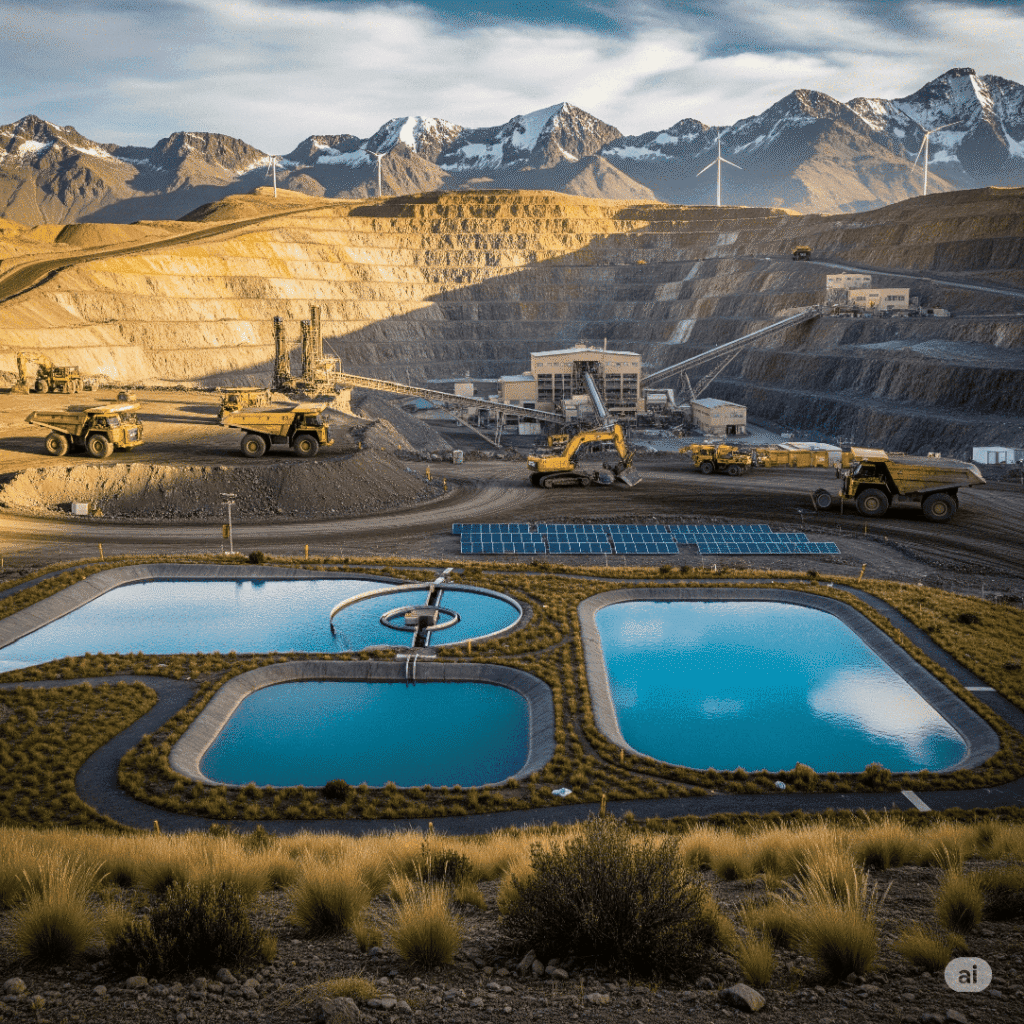
The Scourge of Illegal Mining and Environmental Remediation in Peru
One of the most pressing issues in Peru is illegal mining, which poses a significant threat to the discovery of new mineral resources and community safety. In some areas, the presence of informal operations has made it nearly impossible for formal companies to operate. This is not merely an enforcement problem; it’s also a regulatory one.
The REINFO system (Registro Integral de Formalización Minera), intended to help small-scale and artisanal miners enter the formal economy, has yielded mixed results. As of early 2025, over 20,000 miners remain active in REINFO, while more than 61,000 are suspended, many of whom may still be operating without oversight. Critics argue that the program has become a loophole, allowing illegal miners to “camouflage” their activities under the guise of formalization. Enrollment in REINFO, which shields miners from prosecution, has been described as a “shield of impunity,” allowing operations without proper environmental standards, permits, or addressing labor and safety issues. This has led to widespread environmental damage, particularly from mercury use and water contamination. Repeated extensions of the REINFO deadline have further undermined the urgency to formalize.
A new Supreme Decree aims to tighten regulations, giving suspended REINFO users 45 days to submit environmental management plans, production declarations, and register for regulated goods, with failure to comply leading to expulsion. However, skepticism remains about its effectiveness in changing behaviors or simply driving operations further underground. As of December 31, 2025, REINFO will be definitively terminated, and a new legal framework, tentatively called “Law MAPE,” is expected to replace it. This signifies a decisive shift in Peru’s approach to small-scale and artisanal mining governance.
Another urgent issue is environmental remediation. The government has officially logged over 6,000 environmental liabilities from past mining activity, with estimates suggesting over 87,000 more could be linked to informal mining under REINFO. If each liability costs a conservative $500,000 to remediate, the total cleanup bill could exceed $43 billion, nearly half of Peru’s net international reserves. Progress on cleanup has been painfully slow, with the state-run remediation agency, Activos Mineros, spending over S/ 800 million without securing a single closure certificate. As Raúl Benavides noted, “We are giving licenses to pollute, not to operate”.
In response to these pressures, mining companies are beginning to adopt a more holistic approach, investing not only in extraction but also in environmental management, innovation, and community partnerships. Companies like Anglo American, Cerro Verde, and Gold Fields are implementing local procurement programs, social development initiatives, AI-powered water management systems, and improved safety protocols. There’s also growing interest in the circular economy, with initiatives focused on waste reduction, digital traceability, and local supply chains.
The Global Copper Shortage and Investor Outlook
Global copper demand is expected to double by 2035, according to estimates from S&P Global and BHP. The electrification of transportation, expansion of data centers, and the rollout of smart grids are all copper-intensive endeavors. As one expert noted, copper is essential for “all forms of electrification,” and the biggest wave of demand could come from developing countries gaining access to reliable power for the first time.
However, the copper supply pipeline is thin. Many of the world’s major copper mines are over a century old, and permitting a new one can take up to 25 years. The recent closure of a major copper mine in Panama has only added to the urgency. Compounding the problem is the current shortage of copper concentrate. Chinese smelters recently secured deals with Chilean producers at processing fees nearing zero, a clear sign of how tight the market has become. For miners, this presents a paradox: prices are rising, but so are costs, and competition for quality concentrate is fierce. Companies capable of producing clean, high-grade concentrates, like Element 29 aims to do, are well-positioned to capitalize.
The investor community is increasingly prioritizing Environmental, Social, and Governance (ESG) performance. Firms with strong ESG practices are accessing green capital and building reputational advantages. In Latin America, where mining has historically been met with skepticism, ESG leadership can differentiate companies in a crowded field. Companies that transparently report impacts, uphold labor standards, and engage constructively with communities are viewed as less risky and more investable.
Chile holds an advantage in infrastructure, skilled labor, and the development of green energy sources to power its mines. Peru, for its part, has strategic assets like the Chancay Mega Port, which can enhance export routes to Asia. Yet, both countries must tackle aging mine assets and the complexities of expanding operations in regions with heightened socio-environmental sensitivity.
The global investment community is watching closely. Junior miners with de-risked assets, strong community ties, and clean metallurgy are attracting capital. Simultaneously, there is renewed interest in porphyry systems due to their scale and long life. Porphyry clusters, like those pursued by Hannan Metals in Peru, can be game-changers for companies and the broader supply chain.
A Historic Inflection Point
The copper industry faces a historic inflection point. The metal is foundational to the green transition, but securing sufficient supply is fraught with risk. Chile and Peru, despite their challenges, remain central to the solution. Success will hinge on regulatory reform, strategic exploration, ESG leadership, and infrastructure investment. Investors with a long-term view and an appetite for calculated risk may find significant opportunity in the region. The key will be identifying companies that are not only discovering the next major copper deposit but are also equipped to bring it to market efficiently, responsibly, and with robust community support. In the race to meet global copper demand, the Andes still hold the prize, but winning it will not be easy.
In the upcoming global economic storm, both gold and silver, as well as copper, are essential tools for capital preservation and strategic navigation. The headwinds facing the global economy are indeed the tailwinds that will propel these metals to new heights. Smart and responsible investment will be the key to thriving in this dynamic and changing landscape.