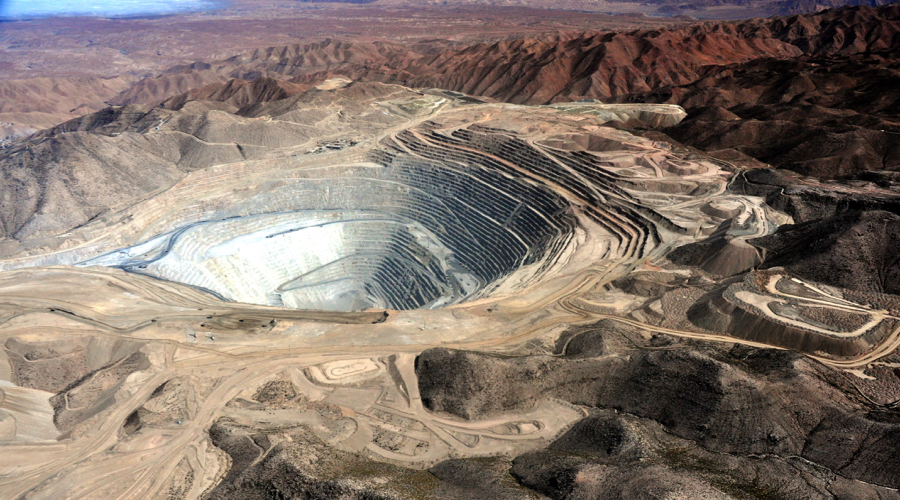
Peru’s mining sector is having a landmark year. Employment is at an all-time high, investment projections are strong, and companies are rolling out new sustainability and innovation initiatives at a scale we haven’t seen before. But all that momentum comes with serious questions: How can the country tackle illegal mining? Who’s going to clean up the environmental damage? And can the industry really deliver on its promises of inclusion and long-term sustainability?
Let’s start with the numbers. As of early 2025, the mining industry directly employs over 242,000 people in Peru — the highest on record. And because the sector has such a wide economic footprint, each of those jobs is estimated to generate about eight more across supply chains, services, and communities.
The investment pipeline is just as impressive. According to Peru’s Ministry of Energy and Mines (Minem), 14 new mining projects are set to begin between 2026 and 2029, bringing in more than $14.6 billion. When you include the full portfolio of planned developments through 2029, the figure climbs to nearly $20 billion. Big-name projects like Tía María, Corani, and Ampliación Ilo are either already underway or approaching final approvals.
Exploration activity is also picking up. There are 84 exploration initiatives in the pipeline, with copper leading the way — not surprising, given Peru’s global position as a top copper producer. Most exploration is concentrated in Ica, Arequipa, Apurímac, and Áncash, with a combined investment of over $600 million. Gold, while a smaller share, still draws attention with 13 active projects.
Peru’s economic fundamentals are part of the draw. Inflation remains relatively low, the country maintains solid international reserves, and interest rates are competitive, making credit more accessible for large-scale investment.
For all the excitement around new projects and rising employment, there’s an uncomfortable truth: Peru’s mining industry is dealing with some serious unresolved issues. At the top of the list is illegal mining — and its ripple effects on exploration, environmental degradation, and community safety.
According to the Peruvian Institute of Mining Engineers (IIMP), illegal mining has become a major threat to the discovery of new mineral resources. In some areas, the presence of informal operations has made it nearly impossible for formal companies to operate. It’s not just an enforcement problem — it’s also a regulatory one.
Take the REINFO system (Registro Integral de Formalización Minera), created to help small-scale and artisanal miners enter the formal economy. While well-intentioned, the program has produced mixed results. As of early 2025, over 20,000 miners are still active in REINFO, while more than 61,000 are suspended — many of whom may still be operating without oversight. Critics argue that the program has become a loophole, allowing illegal miners to “camouflage” their activities under the guise of formalization.
A new Supreme Decree aims to tighten things up, giving suspended REINFO users 45 days to submit environmental management plans, production declarations, and register for regulated goods. Failure to comply means expulsion. But there’s skepticism about whether this will change behaviors or just drive operations further underground.
Another urgent issue is environmental remediation. The government has officially logged more than 6,000 environmental liabilities tied to past mining activity, and estimates suggest over 87,000 more could be linked to informal mining under REINFO. If each liability costs about $500,000 to remediate — a conservative estimate — the total cleanup bill could surpass $43 billion. That’s nearly half of Peru’s net international reserves.
Even worse, progress on cleanup has been painfully slow. The state-run remediation agency, Activos Mineros, has spent over S/ 800 million without securing a single closure certificate. Private companies have only closed three liability sites. As Raúl Benavides wrote in a recent industry editorial, “We are giving licenses to pollute, not to operate.”
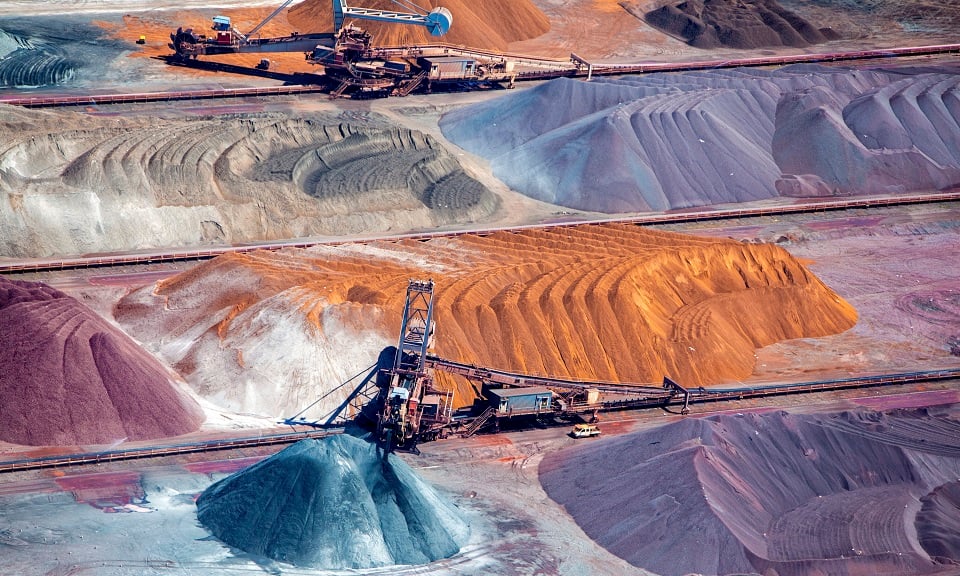
In response to these pressures, mining companies are starting to shift their approach — investing not just in extraction, but in environmental management, innovation, and community partnerships.
Take Anglo American. Since 2018, the company has invested more than S/ 2.5 billion in local purchases and over S/ 249 million in social programs in Moquegua. They’ve also supported the development of “Go Live,” an AI-powered water management system that can detect underground leaks and predict pipe failures, making public utilities more efficient.
Cerro Verde recently earned its 17th patent for a device that uses ultrasonic testing to check internal pipe linings, improving safety and reducing environmental risks. Gold Fields, for its part, spent over S/ 100 million in 2024 alone on local goods and services and continues to pay millions in royalties and taxes to Cajamarca and Hualgayoc.
There’s also growing interest in the circular economy. Peru’s Ministry of Environment has launched a national roadmap for a transition to circular production models by 2030. Mining companies are responding with initiatives focused on waste reduction, digital traceability, and local supply chains.
One area where progress is more uneven is gender equity. Women still account for less than 8% of Peru’s mining workforce. But there are bright spots. Gold Fields’ “Protagonistas Mineras” program has helped boost female participation in its Peruvian operations from 13% in 2017 to 27% today, with a growing number in leadership and operational roles.
At the same time, training institutions like Cetemin are revamping their offerings to reflect the new demands of the sector — focusing on automation, digital systems, and sustainable operations. The idea is to build a skilled local workforce that can adapt as the industry evolves.
Beyond operations, there’s a bigger rethink underway: how mining fits into regional development. Joao Guimaraes of Arup has called for a shift from “mining corridors” to “development corridors,” with more emphasis on health, infrastructure, governance, and long-term planning.
In Pataz, La Libertad, the government has launched a multisectoral initiative to align mining with social investment, infrastructure upgrades, and formalization efforts. The plan includes the establishment of a permanent local office to monitor mining activities, enforce compliance, and track georeferenced data.
Other companies are taking similar steps. Buenaventura, which operates in eight regions, works with more than 100 peasant communities and 20 Indigenous populations, emphasizing local hiring and cultural integration. Antamina is supporting agro-export projects in Huarmey to diversify the economy and strengthen family incomes.
With copper prices rebounding — Cochilco recently projected $4.30 per pound for 2025 and 2026 — and global demand climbing due to the energy transition, Peru is positioned to benefit. But the industry’s future depends on more than just commodity cycles.
Events like PERUMIN 37 are helping shape that future by fostering collaboration between companies, researchers, policymakers, and local communities. From innovation awards to student scholarships, the sector is slowly building the networks and ideas it needs to evolve.
The Peruvian mining sector in 2025 is both a success story and a warning sign. There’s real growth, real investment, and real progress in areas like innovation and inclusion. But without stronger action on illegal mining, environmental remediation, and regulatory reform, the risks could eventually catch up.
The choice is clear: double down on responsibility, or risk undermining everything the industry has worked to build.